Célio

Célio

Unified digital retail experience for a 550-store network, connecting e-commerce, mobile journeys and store-related services.

Role

Lead · Omnichannel · Design ops

Challenge

550 stores. No unified experience.

Scope

E-commerce · Mobile · DS · Retail

Impact

550 stores. 40 countries. 1 system.

01 · Situation

550 stores. Multiple digital touchpoints. No unified experience.

Célio operated a 550-store network across 40 countries with a significant online presence. Its digital touchpoints had grown organically — e-commerce, mobile, store-connected services — without a unifying experience logic. The result was fragmentation: inconsistent journeys, disconnected channels and a brand experience that varied depending on how a customer chose to shop.

The challenge was to unify the digital retail experience across channels without rebuilding from scratch — identifying the structural decisions that would create coherence across e-commerce, mobile journeys and the services connecting online behaviour to physical stores.

01

Channel fragmentation

E-commerce, mobile and store-connected services had grown independently with no shared experience logic

02

Inconsistent journeys

Customer experience varied significantly depending on entry point and channel

03

Scale complexity

550 stores across 40 countries with different operational realities to account for

04

No shared language

Design and development teams had no common component baseline across channels

The real problem

02 · Approach

Structure first. Consistency follows.

Unifying 550 stores worth of digital experience required getting the structural decisions right before touching individual journeys. Channel architecture, shared design language and store-connected service logic had to be established as foundations.

E-commerce redesign

Tension

A growing platform without a coherent information architecture.

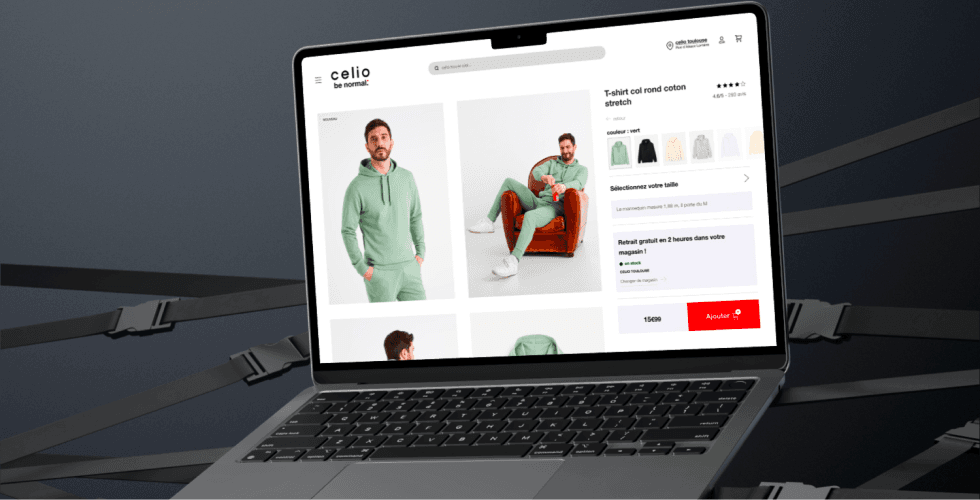
Célio's e-commerce platform had accumulated features and content without a governing IA logic. Navigation, product discovery and purchase journeys had grown in different directions, creating friction at the points where customers needed clarity most.

Call

Rebuild the IA around customer intent, not category structure.

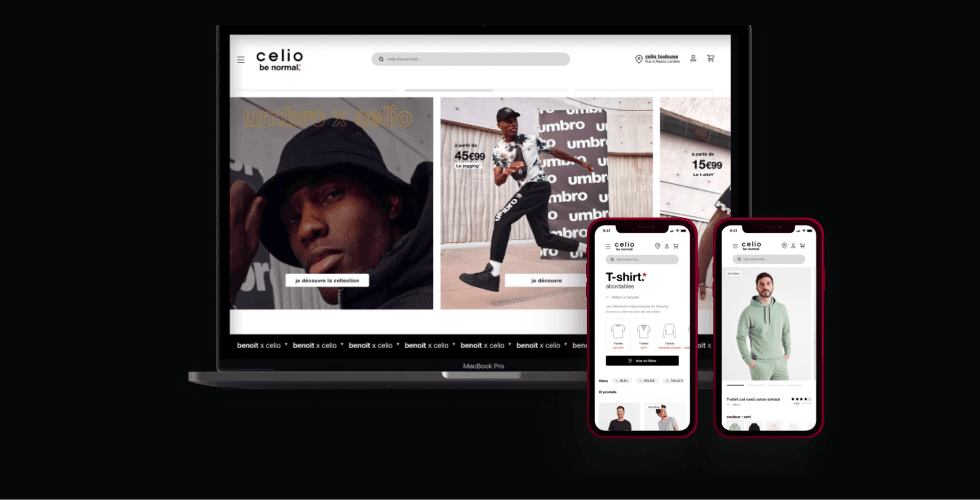
The information architecture was rebuilt around the way Célio's customers actually shopped — by occasion, by style, by need — rather than by the internal product category logic. Navigation, filtering and product page structure were redesigned to reduce the path from intent to purchase.

Result

A coherent e-commerce experience aligned with shopping behaviour.

The redesigned platform reduced journey friction and improved the alignment between how customers thought about fashion purchases and how the platform guided them through the catalogue.

Mobile experience

Tension

Mobile was an afterthought, not a starting point.

Célio's mobile experience had been adapted from the desktop platform rather than designed for mobile usage patterns. The result was a functional but suboptimal experience for a customer base that was increasingly mobile-first.

Call

Design mobile journeys around the specific behaviours of fashion retail on-the-go.

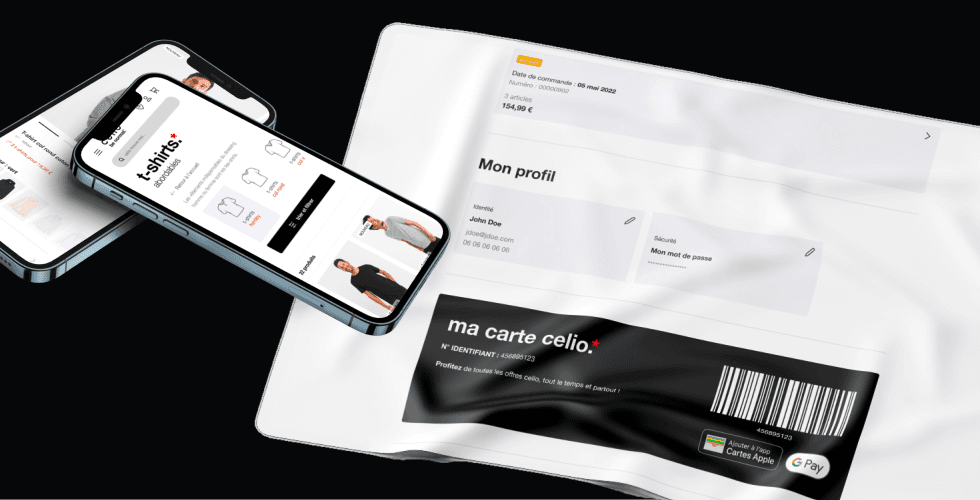
Mobile journeys were redesigned for the contexts in which Célio's customers actually used them: product discovery while commuting, price checking near stores, wishlist management before purchase decisions. Store-connected features — availability checking, store locator, click and collect — were integrated into the mobile journey as primary, not secondary, features.

Result

A mobile experience designed for how customers actually shop.

The mobile redesign connected online browsing behaviour to physical store context — making the transition between digital and in-store shopping feel intentional rather than disjointed.

Design system

Tension

No shared design language across channels and teams.

E-commerce, mobile and store-connected digital interfaces had been built by different teams at different times with no shared component logic. Visual and interaction inconsistencies had accumulated across every channel.

Call

Build a shared design language that works across all channels.

A component library was established as the shared foundation for all digital touchpoints — e-commerce, mobile and store-connected services. The system was built to absorb the operational variation of 40 countries while maintaining brand and experience consistency.

Result

One design language. 550 stores. 40 countries.

The shared component system gave Célio's product and development teams a common language for digital decisions — reducing inconsistency, accelerating delivery and making experience quality maintainable at scale.

Take away

03 · Outcomes

What unification produced.

A fragmented multi-channel presence unified into a coherent omnichannel experience — at the scale of 550 stores across 40 countries.

BeforeAfter

Channels grown independently

Unified omnichannel experience logic

No shared design language

1 component system. 40 countries.

Online and store disconnected

Store-connected services integrated

stores connected

550

single digital experience logic across the network

countries

40

international rollout on a shared design system

channels unified

3

e-commerce, mobile and store-connected services

design language

1

shared component system across all digital touchpoints

04 · Takeaways

Three things this confirmed.

01

Omnichannel coherence is an architecture problem before it is a design problem. Getting the structural decisions right — how channels relate, what they share, where they differ — determined everything downstream.

02

Scale does not forgive fragmentation. 550 stores amplifies every inconsistency. The shared design system was not a nice-to-have. It was the only way to make quality maintainable.

03

Mobile journeys in retail need store context to be complete. Connecting availability, location and purchase intent in the mobile experience made the channel genuinely useful, not just convenient.

Closing

Omnichannel is not a feature set. It is a structural commitment.

Célio demonstrated that unifying a 550-store network required decisions that went beyond individual journey improvements. Getting the architecture right — shared design language, channel relationships, store-connected logic — created the conditions for coherent experience at a scale that individual design work could not achieve.